
Project brief
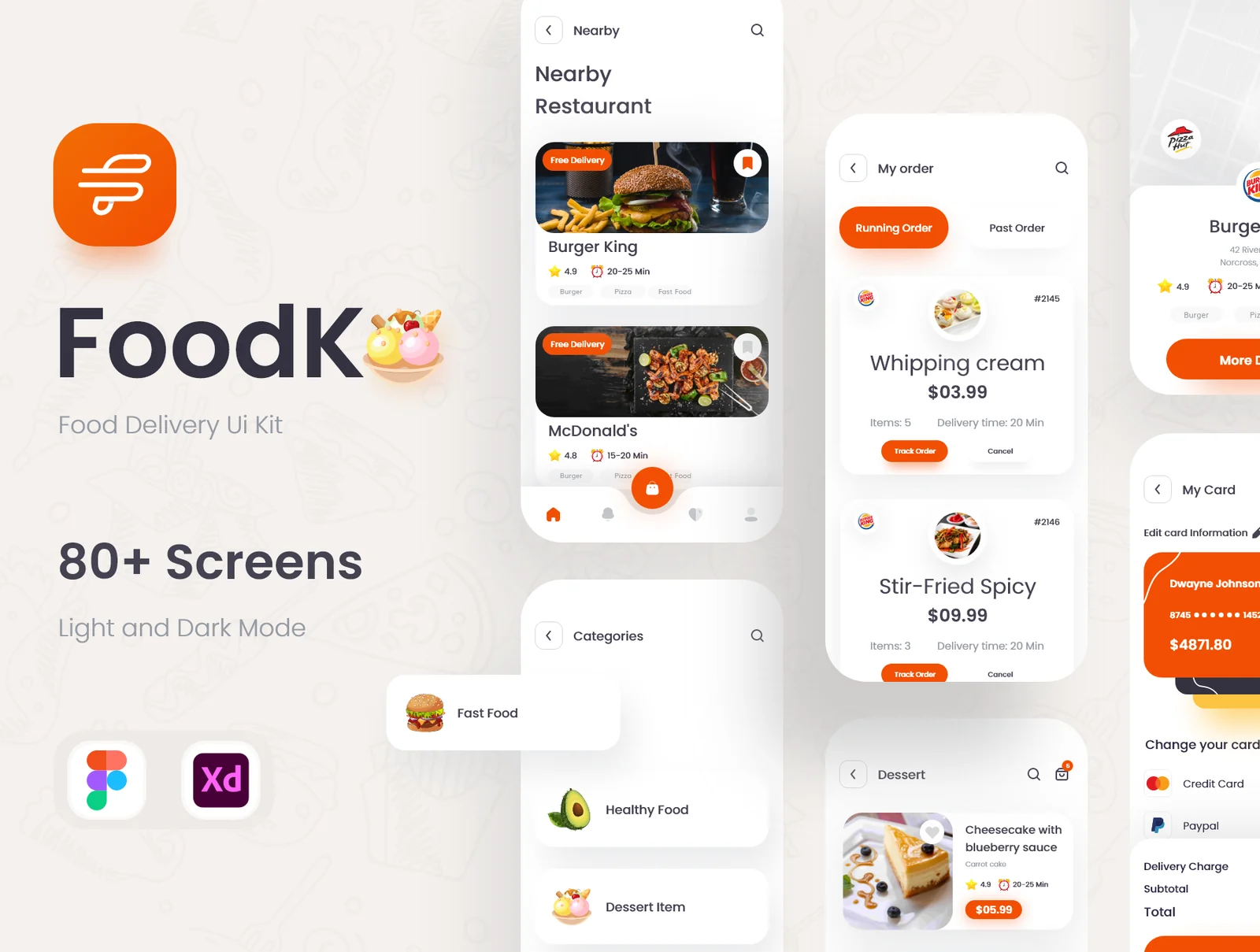
FoodK combines customer ordering, restaurant operations and delivery work in one product. The project covers the customer-facing website and app, a separate delivery app, restaurant tools and a Laravel administration panel. Its gallery documents menu browsing, item selection, checkout and delivery-related screens in light and dark interface variants.
Users and responsibilities
- Customers browse restaurants and menus, choose item options, place orders and follow delivery progress.
- Restaurant staff maintain branch menus and process incoming orders.
- Delivery staff receive assigned orders, use navigation information and review delivery earnings.
- Platform administrators manage the system through the Laravel panel.
Keeping these roles separate matters because each one needs different data and actions. A customer should not see restaurant controls, and a driver should only receive the information needed for an assigned delivery.
Delivered scope
- Customer mobile app and ordering website.
- Menu, category, product-option, cart and checkout interfaces.
- Delivery app for assignments, navigation and earnings.
- Restaurant panel for menus, orders and multiple branches.
- Laravel administration panel for system management.
- Order notifications, ratings and payment integrations.
Core order workflow
The customer selects a restaurant, browses its menu and adds configured items to the cart. Checkout collects the order and payment details. The restaurant then handles the order through its operational view, while the delivery app gives the assigned driver the delivery information. Customer notifications and tracking screens cover the order after checkout, and rating screens collect feedback at the end of the flow.
Implementation decisions
A production setup needs written rules for delivery areas, branch availability, item options, fees and order states. Multi-branch operation also needs a clear source for each branch's menu and availability. Payment methods depend on the selected provider, supported country and merchant account, so the integration must be confirmed before it appears as an available checkout option.
Verification and handoff
Testing should cover the same order across all roles. Verify the price and selected options in the cart, the branch that receives the order, every status change, driver assignment, customer notifications and the final order record. Payment failures, cancelled orders and unavailable items also need agreed behaviour. The screenshots document the interface, but each new deployment needs its own provider credentials, branch data and device testing.
Possible next phase
A later phase can add new branches, delivery areas, payment providers or operational reports after the current order flow is verified. Each addition should name the team that owns its data and the acceptance checks required before release.
Explore our mobile app development and payment integration services.