
ERP Systems: The Backbone of Modern Business Operations
What does this article explain?
ERP connects accounting, inventory, sales and other business records. Learn how to choose modules, prepare migration and test workflows before rollout.
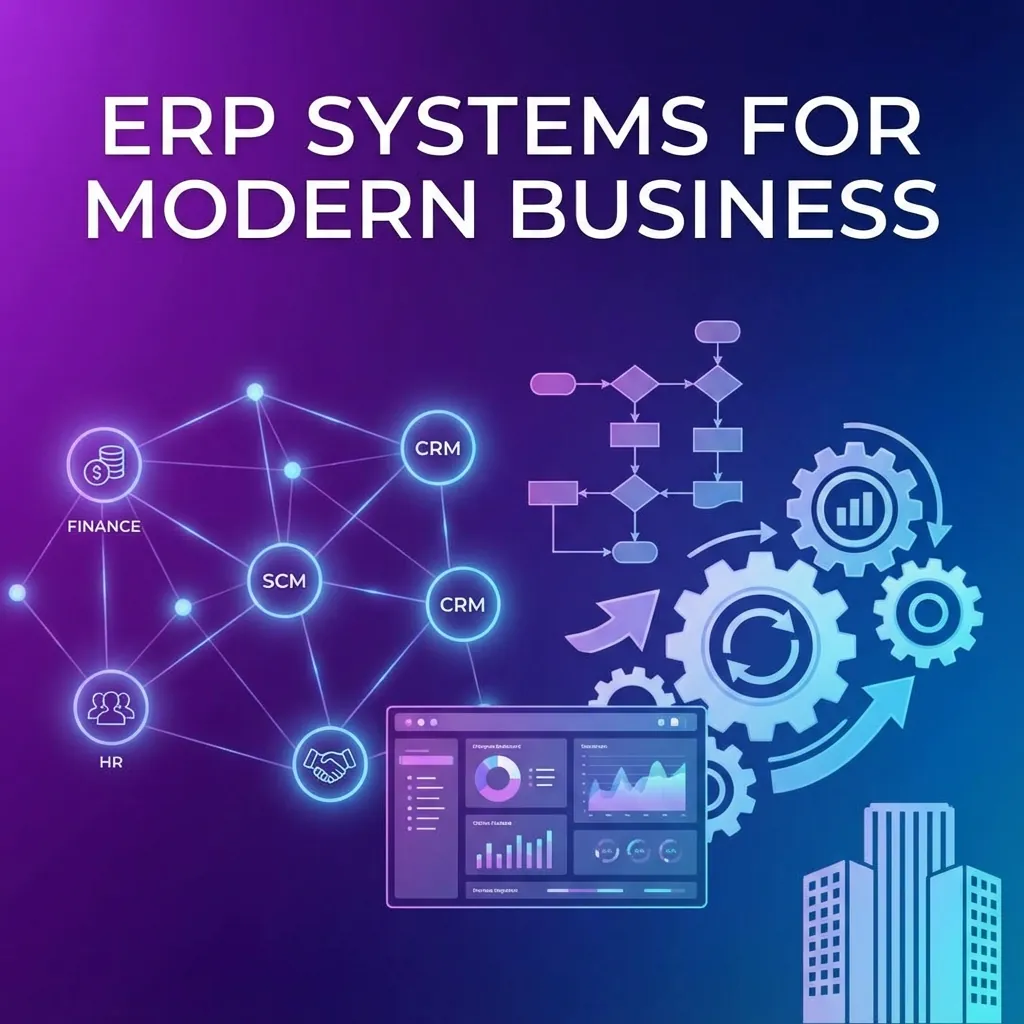
What is an ERP System?
Enterprise Resource Planning (ERP) is integrated software that manages all core business processes in real-time. From finance and HR to inventory and sales, ERP provides a single source of truth for your entire organization.
Core ERP Modules
1. Financial Management
- General ledger and accounting
- Accounts payable/receivable
- Budgeting and forecasting
- Financial reporting and compliance
2. Human Resources
- Employee records and payroll
- Recruitment and onboarding
- Performance management
- Benefits administration
3. Supply Chain Management
- Inventory tracking
- Procurement and purchasing
- Warehouse management
- Supplier relationship management
4. Sales & CRM
- Customer database
- Order management
- Sales pipeline
- Marketing automation
Benefits of Modern ERP
| Benefit | Impact |
|---|---|
| Single Data Source | Eliminate data silos |
| Real-time Visibility | Faster decision making |
| Process Automation | Reduce manual errors |
| Scalability | Grow without limits |
| Compliance | Meet regulatory requirements |
Cloud vs On-Premise ERP
Cloud ERP (Recommended):
- Lower upfront costs
- Automatic updates
- Access from anywhere
- Faster deployment
On-Premise ERP:
- Full data control
- Customization flexibility
- No internet dependency
- Higher security (for some industries)
Smart Team ERP Solutions
We build and implement ERP systems tailored to your business:
- Custom ERP Development - Built from scratch for unique needs
- ERP Integration - Connect with existing systems
- ERP Migration - Move from legacy to modern platforms
- ERP Training - Empower your team to use the system